
Resources to Help Accelerate Your Product Development
Our goal is to help you learn, implement and succeed. See our blog, white papers, webinars, and other content from our experts. All content is freely downloadable.

Refine by Resource Topic or Type

10 Steps to a Successful Creo Implementation
Key Takeaways Successful Creo implementation starts with a clear plan. Involving engineering, IT, and management early helps align technical requirements with business goals and reduces deployment challenges. Hardware readiness and standardized workflows are...

End-to-End Traceability: From Requirements to Validation
Key Takeaways Clear requirements are the foundation of successful product development. Defining measurable requirements and acceptance criteria early helps teams prevent ambiguity and costly rework. Verification and validation serve different purposes. Verification...

Forward Deployed Engineers vs. Consultants: What’s the Difference?
Key Takeaways Consultants, professional services, and managed services serve different purposes. Consultants provide strategic guidance, professional services focus on implementation, and managed services support ongoing operations. Forward Deployed Engineers (FDEs)...

How Product Teams Can Measure AI Coding ROI
Key Takeaways AI adoption alone does not prove ROI. Teams must measure how AI coding tools impact development speed, software quality, engineering capacity, and overall costs. Developer time saved must translate into business value. Tracking recovered hours,...

AI Has a Cost. Here’s How We Prove the Benefit.
Key Takeaways AI ROI starts with a measurable business problem. Companies should define what they want AI to improve before investing in tools or launching pilots. AI value should be measured across speed, quality, cost, and capacity. These four areas help connect AI...

Replacing IBM DOORS: Which Path Is Right?
Legacy IBM DOORS remains a mature requirements management platform, particularly for complex and regulated engineering programs. It provides structured specifications, baselines, electronic signatures, change management, and multi-level traceability. However,...
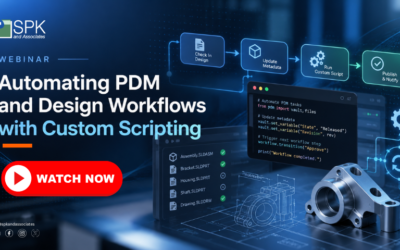
Automating PDM and Design Workflows with Custom Scripting
Mechanical and design engineers spend valuable time on repetitive administrative tasks such as metadata entry, file conversions, BOM exports, naming conventions, and approval processes. Many of these activities can be automated using custom scripting, APIs, and better...

Avoiding Audit Failures with End-to-End Digital Traceability
Key Takeaways Audit failures often stem from incomplete records, disconnected systems, weak controls, and manual processes. Continuous traceability helps teams capture compliance evidence as part of everyday engineering work. Connecting ALM and PLM creates clearer...

10 Reasons to Use Jira Service Management
Key Takeaways JSM connects IT, development, operations, and business teams to reduce silos, duplicate work, and lost context. Automation and AI reduce repetitive work by streamlining routing, approvals, support requests, and common service tasks. Self-service improves...
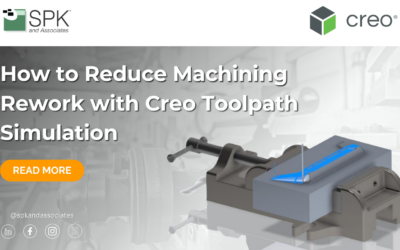
How to Reduce Machining Rework with Creo Toolpath Simulation
Key Takeaways Creo Manufacturing keeps toolpaths associated with the design model, so design updates carry through to manufacturing with less rework. Toolpath simulation finds collisions, gouges, and material removal problems before machining starts. Reusable...
Latest White Papers
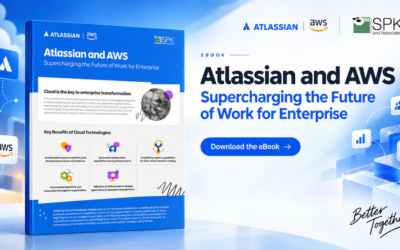
Atlassian and AWS: Supercharging the Future of Work for Enterprise
Adopting cloud technologies can lead to benefits such as enhanced collaboration or expedited decision-making. Explore how the collaboration between Atlassian and AWS achieves these results.What You Will Learn In this eBook, you will discover: Key benefits of cloud...