1-888-310-4540 (main) / 1-888-707-6150 (support) info@spkaa.com
Select Page

PTC

Successfully Migrate Your Requirements from IBM DOORS to Codebeamer

Successfully Migrate Your Requirements from IBM DOORS to Codebeamer

Key Takeaways Codebeamer manages the whole lifecycle. Requirements, risk, testing, and change management live in one platform instead of separate tools. Traceability and compliance are built in. End-to-end links and regulatory templates support standards such as ISO...

What Are AI Agents and Why Should Engineering Leaders Care?

What Are AI Agents and Why Should Engineering Leaders Care?

Key Takeaways AI agents take action, not just answer questions. They combine a model with memory, reasoning, tools, and connections to complete multistep engineering work. The biggest gains from AI are through the process. AI can be a feature within a final product,...

Strategies for Optimizing Software License Costs

Strategies for Optimizing Software License Costs

Introduction Hello, everybody, and welcome back to another SPK & Associates Vlog. My name is Michael Roberts. I'm the Vice President of Sales and Marketing here at SPK. So today, we're going to talk about something that shows up on every engineering and IT budget...

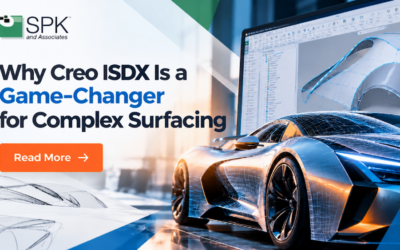
Why Creo ISDX Is a Game-Changer for Complex Surfacing

Why Creo ISDX Is a Game-Changer for Complex Surfacing

Key Takeaways Creo ISDX (Interactive Surface Design Extension) is a Creo Parametric add-on for building freeform curves and surfaces, aimed at shapes like ergonomic grips and sculpted housings that are slow to model with technical surfacing alone. Engineers edit...

Modernizing Product Development by Moving Off Legacy Platforms

Modernizing Product Development by Moving Off Legacy Platforms

Legacy ALM platforms often remain in place because years of customization, integrations, historical data, and compliance records make migration difficult. But aging platforms can limit collaboration, automation, cloud adoption, AI capabilities, and the ability to...

10 Steps to a Successful Creo Implementation

10 Steps to a Successful Creo Implementation

Key Takeaways Successful Creo implementation starts with a clear plan. Involving engineering, IT, and management early helps align technical requirements with business goals and reduces deployment challenges. Hardware readiness and standardized workflows are...

Why Traceability Is the Foundation of Modern Compliance

Why Traceability Is the Foundation of Modern Compliance

Key Takeaways End-to-end traceability is essential for regulatory compliance. Connecting requirements, risks, tests, changes, and approvals helps organizations maintain accurate compliance records throughout product development. Connected traceability improves audit...

Replacing IBM DOORS: Which Path Is Right?

Replacing IBM DOORS: Which Path Is Right?

Legacy IBM DOORS remains a mature requirements management platform, particularly for complex and regulated engineering programs. It provides structured specifications, baselines, electronic signatures, change management, and multi-level traceability.  However,...

End-to-End Traceability: From Requirements to Validation

End-to-End Traceability: From Requirements to Validation

Key Takeaways Clear requirements are the foundation of successful product development. Defining measurable requirements and acceptance criteria early helps teams prevent ambiguity and costly rework. Verification and validation serve different purposes. Verification...

How to Reduce Machining Rework with Creo Toolpath Simulation

How to Reduce Machining Rework with Creo Toolpath Simulation

Key Takeaways Creo Manufacturing keeps toolpaths associated with the design model, so design updates carry through to manufacturing with less rework. Toolpath simulation finds collisions, gouges, and material removal problems before machining starts. Reusable...

Avoiding Audit Failures with End-to-End Digital Traceability

Avoiding Audit Failures with End-to-End Digital Traceability

Key Takeaways Audit failures often stem from incomplete records, disconnected systems, weak controls, and manual processes. Continuous traceability helps teams capture compliance evidence as part of everyday engineering work. Connecting ALM and PLM creates clearer...