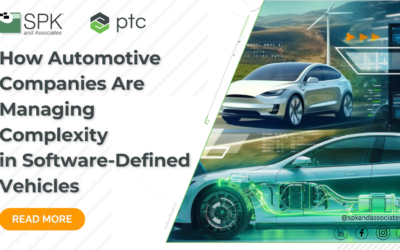

In all of automotive history, vehicles have been defined by mechanical performance, hardware reliability, or manufacturing efficiency. That has all started to change as software, connectivity, autonomy, electrification, and personalized digital experiences become a...
Edwin Chung
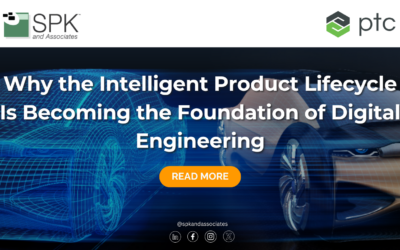
Why the Intelligent Product Lifecycle Is Becoming the Foundation of Digital Engineering
Digital engineering is changing how companies design, build, and manufacture complex products. Instead of relying on disconnected documents and manual handoffs, organizations are moving toward digital threads, simulations, and AI-enabled workflows. However, digital...
The Future of Automotive Engineering: AI and SaaS in the Connected Lifecycle
As an automotive engineer, it is hard to ignore the rise of software-defined vehicles and electrification. When combined with strict compliance expectations and growing pressure to innovate faster, traditional engineering systems just aren’t cutting it. On-premise...
5 Signs Your Legacy MES Is Holding You Back And How Composable Platforms Solve It
Manufacturing execution systems (MES) were once the backbone of shop floor control. Today, many legacy MES platforms have become barriers to innovation rather than enablers of it. Slow deployment cycles and limited integration capabilities make it difficult for...
How Manufacturers Can Drive Real-Time Production Visibility and Quality Improvements
Introduction: Manufacturing with Tulip Hello and welcome. My name is Michael Roberts, Vice President of Sales and Marketing with SPK and Associates. Today we're here to talk about a topic that is really important for manufacturers. Manufacturers are constantly under...
Why Intelligent Product Lifecycle Management Starts with Integration
Today’s products combine mechanical, electrical, and software engineering, which leads to more complexity during development. These same products are often developed across multiple teams, tools, and geographies. Many organizations invest heavily in modern systems...
Turning OEE Insights into Continuous Improvement Action for Manufacturers
Most manufacturers track overall equipment effectiveness (OEE) as a standard for productivity. The challenge is not collecting this number, but turning the number into action on the shop floor. Too often, OEE becomes a static KPI that shows whether performance was...
Integrating ALM, PLM, and DevOps to Accelerate the Digital Thread
Modern product development depends on speed, traceability, and collaboration, yet many enterprises still operate with disconnected systems. This fragmentation makes it difficult to deliver high-quality, compliant products on time. A connected digital thread changes...
5 MES Trends for 2026 — and How to Get Ahead
Manufacturing execution systems (MES) are evolving faster than ever. Rising sustainability requirements, ongoing workforce shortages, increasing product complexity, and tighter regulatory oversight are pushing manufacturers to rethink how they run shop floor...
Modernizing Life Sciences: Unlocking Value Through Digital Transformation
Biopharma and medtech leaders are under constant pressure to accelerate clinical development and satisfy increasingly demanding regulators. Digital transformation is the way to do this. This doesn’t just mean adopting new tools, but rather rethinking how science,...
Health and Safety Regulations: A Revenue Impact Analysis
Compliance with environment, health, and safety (EHS) regulations is critical for organizations across fields. This is not just due to the importance of creating safe products, but also due to the financial benefits. The inability to compete in markets with...
The Importance of ISO 17025 for Testing and Calibration Laboratories
Testing and calibration laboratories play a critical role in industries ranging from manufacturing and chemicals to healthcare and research. Their results often influence product safety, regulatory compliance, and customer trust. Organizations must ensure their...