
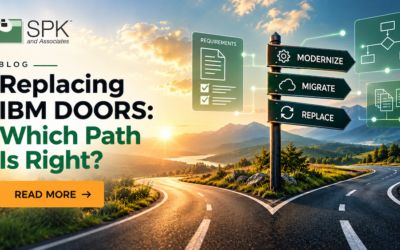
Legacy IBM DOORS remains a mature requirements management platform, particularly for complex and regulated engineering programs. It provides structured specifications, baselines, electronic signatures, change management, and multi-level traceability. However,...
Codebeamer
End-to-End Traceability: From Requirements to Validation
Key Takeaways Clear requirements are the foundation of successful product development. Defining measurable requirements and acceptance criteria early helps teams prevent ambiguity and costly rework. Verification and validation serve different purposes. Verification...
Avoiding Audit Failures with End-to-End Digital Traceability
Key Takeaways Audit failures often stem from incomplete records, disconnected systems, weak controls, and manual processes. Continuous traceability helps teams capture compliance evidence as part of everyday engineering work. Connecting ALM and PLM creates clearer...
Modernizing Product Development by Moving Off Legacy Platforms
Register NowYou’ll be taken to a secure registration page to complete your sign-up.By submitting this form, I acknowledge receipt of SPK and Associates' Privacy Policy.Legacy ALM platforms often remain in place because years of customization, integrations, historical...
Achieving End-to-End Traceability with PTC Codebeamer
In complex and regulated product development environments, traceability cannot stop at requirements. Organizations need visibility across the entire development lifecycle, while information is often distributed across multiple tools and teams. Join SPK and Associates...
Unified Excellence in Streamlining Engineering Workflows Across Acquired Divisions with Codebeamer
A global leader in stored energy solutions needed to unify its engineering workflows across Codebeamer and Azure DevOps. OpsHub Integration Manager (OIM) partnered with SPK and Associates to deliver a bi-directional, rule-driven digital thread, enabling controlled...
The Rise of AI-Native Engineering Organizations
Artificial intelligence is changing more than just a few engineering tasks. It is completely reshaping how engineering organizations manage requirements, testing, compliance, support, and development. For years, digital transformation has focused on adopting...
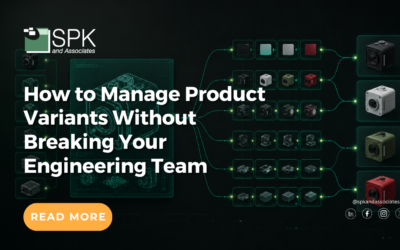
How to Manage Product Variants Without Breaking Your Engineering Team
Modern product companies are under pressure to offer more configurations, features, and customer-specific options without increasing costs or slowing development. This is especially true in industries such as medical devices, automotive, and industrial manufacturing...
History-preserving, zero disruption migration from IBM RTC to PTC Codebeamer
Zero disruption, zero data loss, and full traceability.
 Lynx is a global provider of safety-critical avionics software and hardware solutions. As the firm scaled its engineering operations, the organization required a modernized ALM platform to handle the growing...
Why Integrated PLM and ALM Platforms Are Critical for Electronics Innovation
Innovations in the electronics industry are being rapidly introduced, which has led product lifecycles to shrink and software to become central to nearly every device. Companies are under constant pressure to launch smarter, more connected products ahead of the...
Proven Strategies for Resolving the ALM-PLM Gap in Automotive Engineering
As automotive manufacturers accelerate toward software-defined vehicles, the lines between mechanical, electrical, and software engineering are rapidly blurring. To compete in an era defined by electrification, autonomous systems, connectivity, and regulatory...
Improving Risk Management with End-to-End Visibility
Modern products are becoming increasingly more complex, combining mechanical engineering, embedded software, electronics, cloud connectivity, and regulatory requirements into a single development lifecycle. As that complexity grows, so does the importance of...