


The importance of test management, especially in highly-regulated industries, cannot be overstated. Efficient management of testing requirements leads to safer products, effective production, and satisfied customers. The PTC Windchill Requirements Validation & Source (RV&S) application, previously known as PTC Integrity, provides an elegant solution for managing test requirements and maintaining proper compliance. These solutions apply across multiple industries, including the medical device and automotive verticals.
Test artifacts are a major portion of any PTC Integrity solution. However, there are many other helpful aspects of the RV&S application beyond just test case management. Some examples include test strategy planning, creation of testing objectives, and efficient execution of test results.
RV&S addresses testing through three main tasks: Test Authoring, Test Planning, and Test Execution.
Test Authoring in RV&S (PTC Integrity)
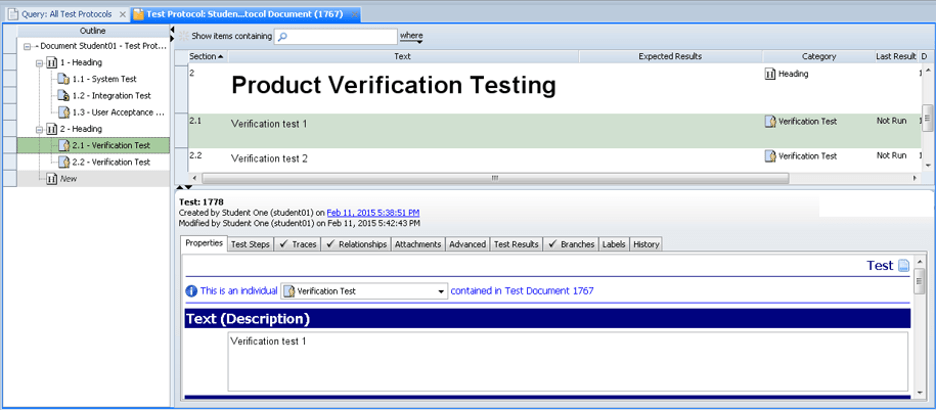
This task helps you create and maintain your Test Protocol documents (including your Test Steps). A Test Protocol document is a document domain with two components: the Test Protocol document item and the Test content item. You can further define what happens within your individual Tests with the “Test Steps” tab. The Test Protocol document helps you trace your individual tests directly back to your requirements and design documents. With both requirements and test management in the same tool, there is no need for a complex integration between two different third party tools.
Test Planning in RV&S (PTC Integrity)
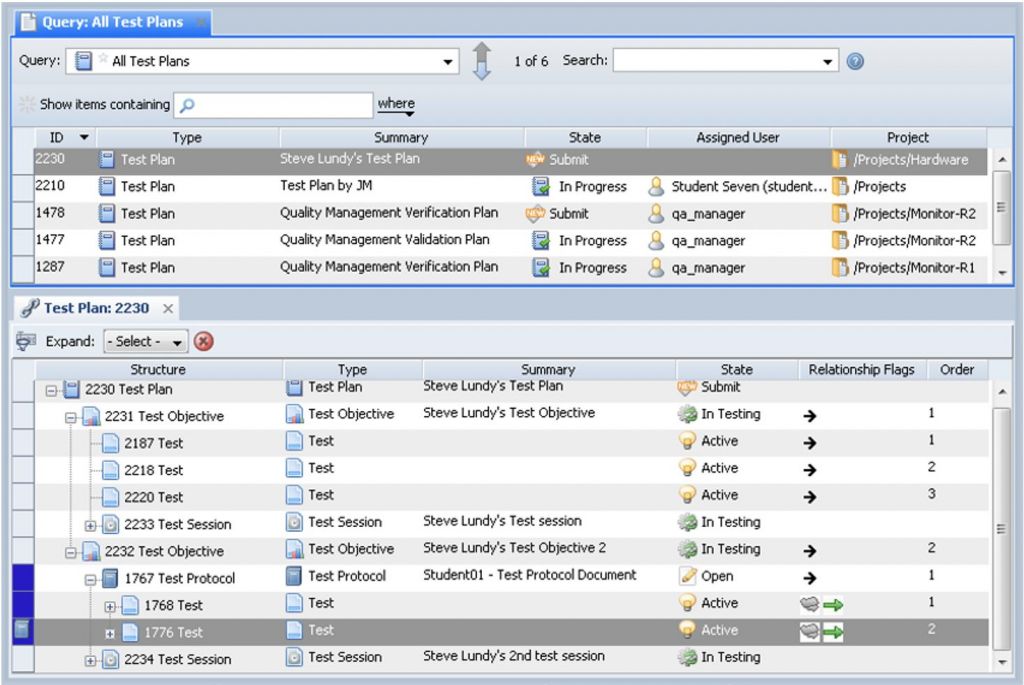
In this phase, you can determine what tests you want to execute as part of your testing strategy. The Test Protocol documents list all the possible test cases you can use in your testing. This feature helps you determine which tests will satisfy your testing objectives. After solidifying your tests from the Test Protocol documents, use the Test Plan item to create sub-categories for all your Test Objective items. From within the Test Objective item, you can choose the proper Tests to add that will satisfy the objectives. The list of possible Tests is in your Test Protocol documents.
Test Execution in RV&S (PTC Integrity)
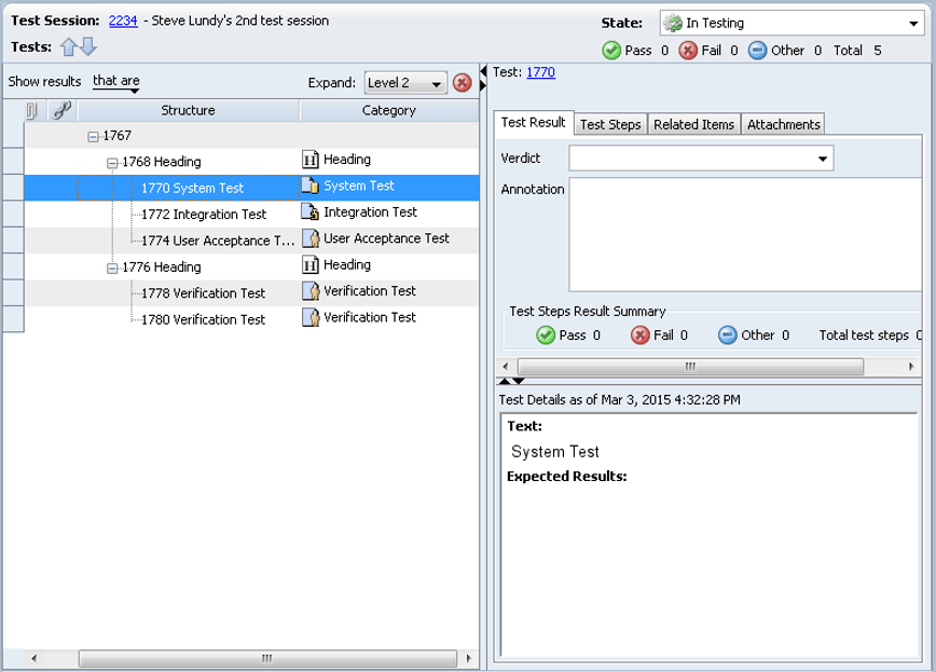
This phase involves execution of your Test Plan. Start by creating Test Sessions against the one or more of the Test Objectives. A Test Session intends to include all the Tests that a given Tester could execute in a single “sitting” while performing tests. Test Sessions can be as small as a single test case from one test objective, or many test cases depending on your needs. The Tester can then enter the results using the Test Result editor. Furthermore, you can link the testing results through the Test Protocol document. This linking leads directly back to your Requirements and Design specifications. Thus, you can report on the requirement, the corresponding design, and the corresponding testing while viewing the results of that testing.
This is just one example of the comprehensive methodology offered by the standard Windchill RV&S (PTC Integrity) solution. It handles your organization’s testing needs with an efficient and easy-to-navigate system. Ultimately, RV&S creates a high-quality method to streamline and ensure control over your entire product release cycle. You can also check these best free test management tools on the market for quality assurance tasks.
Next Steps
- Contact SPK and Associates to see how we can help your organization with other productivity tools for PTC RV&S. We can also assist with RV&S hosting, implementation, configuration, and support services, especially for regulated industry.
- Read our White Papers & Case Studies for examples of how SPK leverages technology to advance engineering and business for our clients.
- Subscribe to our blog to stay informed on product development and engineering efficiency topics.