
Key Takeaways
- AI agents take action, not just answer questions. They combine a model with memory, reasoning, tools, and connections to complete multistep engineering work.
- The biggest gains from AI are through the process. AI can be a feature within a final product, but using agents to build said product shortens cycles and speeds time to market.
- The returns are measurable. Forrester found a 400% ROI and payback in under six months for GitLab Duo Agent Platform, and 80% of organizations report measurable returns from AI agents.
- Agents already live in your toolchain. The tools you know and love are already bringing agents into knowledge management, software delivery, and requirements and test management.
- Integration and governance decide success. Connected data, clear permissions, and defined KPIs turn AI pilots into lasting business value.
AI agents are the quickest path from AI experiments to real-world engineering outcomes. Engineering leaders who blend them with their existing toolchain will ship better products faster. Unlike chat assistants that answer one question at a time, agents can gather context, leverage tools, and complete multistep tasks within the systems your teams already rely on.
This is important because AI is now appearing in two places at once. It shows up in the product as smarter features your customers will utilize, but also emerges in the product building process. From requirements and code all the way through testing, traceability, and release, AI is ever-present. This second AI use case is where many engineering organizations see their biggest gains in innovation and speed to market. In this blog, we will take a look at how agents are changing day-to-day engineering work.
What Is an AI Agent?
An AI agent is a software system that employs an AI model to pursue a goal, not just to answer a prompt. It decides what to do, uses tools and data sources, checks the results, and continues until the task is complete or human intervention is needed. The model is the brain, while the agent is the body that exercises that intelligence.
Common Terms
Here are the terms that engineering leaders will hear most often:
- Artificial intelligence (AI): Computer software that can execute tasks requiring human judgment, such as recognizing patterns, analyzing data, and making predictions.
- Generative AI: AI that generates new content such as text, code, test cases, or images from a prompt.
- AI model (LLM): The intelligence engine that powers an AI system. A large language model understands and generates language, but it can’t see your applications or your company’s data on its own.
- Retrieval-augmented generation (RAG): A method that pulls relevant information from your own sources, such as Confluence pages, Jira issues, or requirements, and feeds it to the model before it answers. RAG sources answers from your data, not general training data.
- AI assistant: A tool that uses AI to answer a user’s request within an application. For example, an AI assistant can summarize a page or explain a block of code. Every step is user-driven.
- AI agent: A model augmented with instruction, memory, reasoning, tools, and connections to allow it to perform multistep work towards a goal.
- Agentic AI: The broader transition from AI that provides answers to AI that acts.
- Model Context Protocol (MCP): An open standard for connecting artificial intelligence systems to external tools and data and is sometimes called ‘USB-C for AI’.
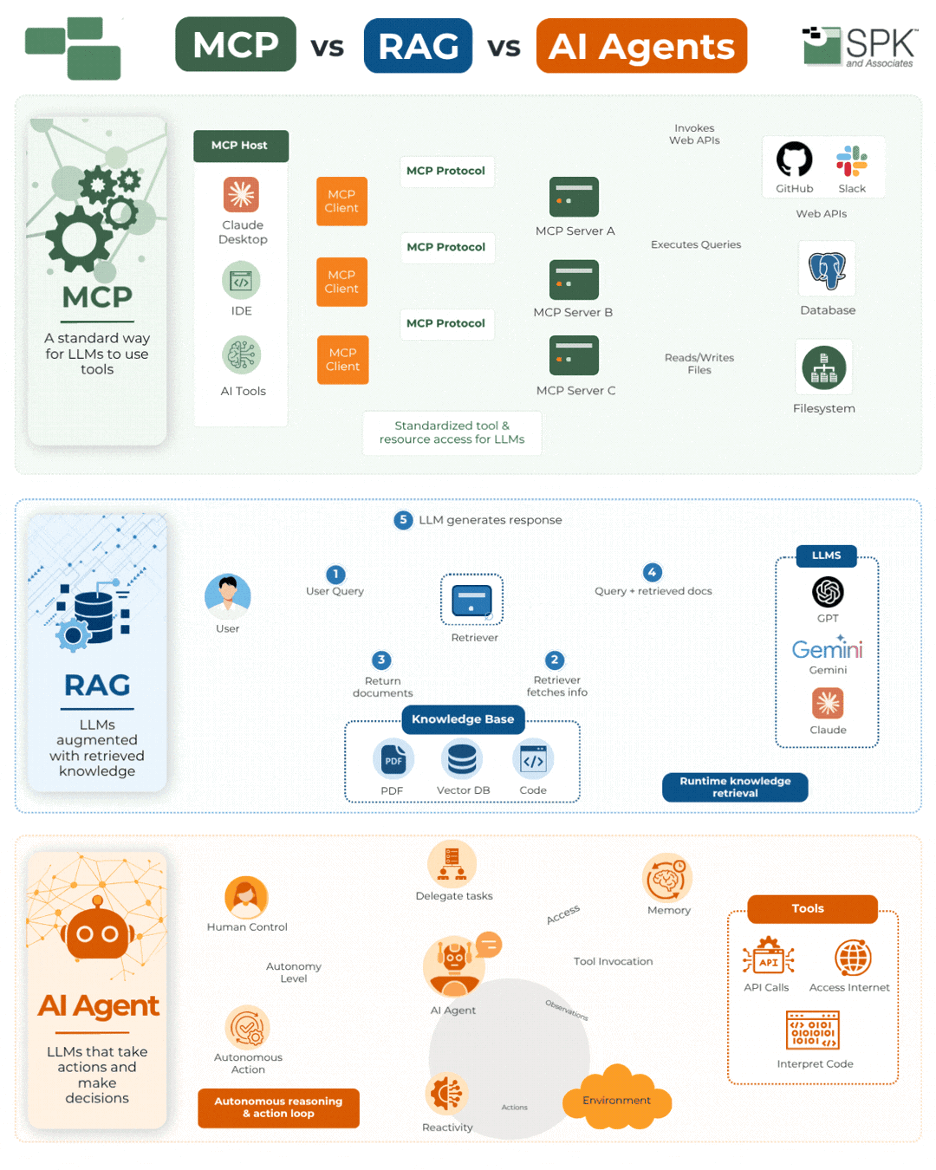
The simplest way to understand the difference is:
- A chatbot is asked a question → it provides an answer
- An agent follows a goal -> gathers context -> reasons -> picks a tool -> acts -> reviews -> provides next step.
If you ask a model for a project status report, it writes text. Ask an agent, and it can pull Jira issues, search Confluence, summarize the findings, and build the report from actual project data. Want to dive deeper? See The 6 Core Components of an AI Agent.
What Do AI Agents Offer To Organizations?
The highest returns come from getting products built faster, and AI agents are already paying off. In a survey of more than 500 technical leaders, Anthropic and Material found that 80% of organizations say their AI agent investments already provide measurable economic returns.
AI in Process: Faster Innovation, Shorter Cycles
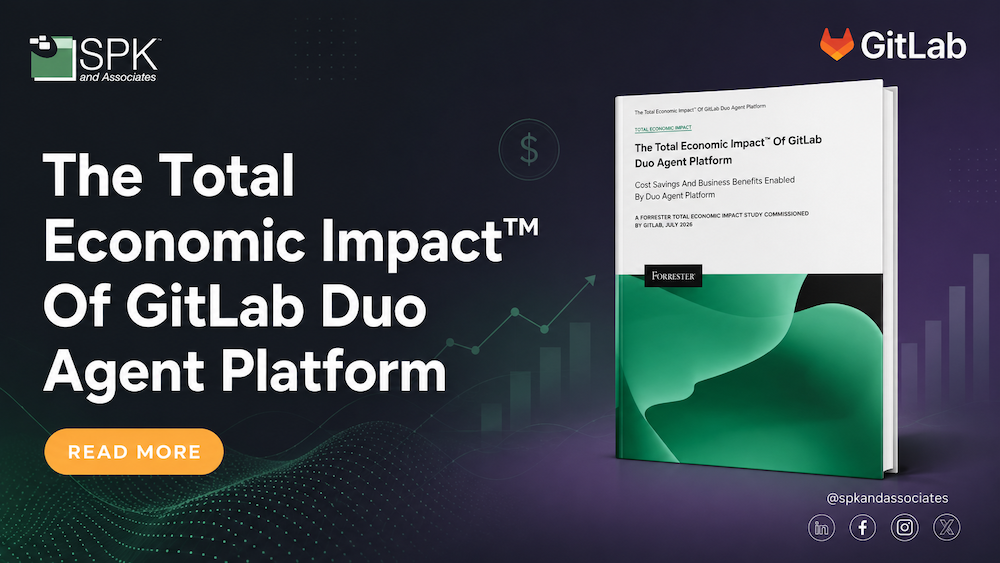
The clearest evidence is from the engineering workflow itself. A Forrester Total Economic Impact™ study of the GitLab Duo Agent Platform found that a composite organization realized:
- 400% ROI in three years with payback in under six months
- 20% more productive individual developers
- 40% time savings for QA and security remediation engineers
- Code migration 75% faster, reducing an eight-month project to two months
- 80% faster new developer onboarding
One interviewee summed up the impact simply: feature releases that took a couple of weeks now take a couple of days.
This pattern is similar across the development lifecycle, according to the Anthropic survey. AI saves time in planning and ideation, code generation, documentation, and code review and testing.
AI in the Product: Smarter Features, Faster Build
Agents also change what you can provide for customers. Teams that use AI to take over routine work in requirements, testing, and reviews have more capacity to build intelligent features into the product itself. In the Anthropic survey, 9 out of 10 leaders say agents are helping their teams do more strategic work and less routine execution.
The catch: Integration and Measurement
While there are many benefits to AI agent implementation, the results are not instantaneous. The top barriers to adoption cited by leaders were integration with existing systems (46%), data access and quality (42%), and change management (39%). That’s why SPK recommends measuring AI on speed, quality, cost, and capacity before you scale.
AI Agents in the Tools Your Teams Use
You don’t need to have a separate AI platform to begin working with agents. Atlassian, GitLab, PTC, and Microsoft are putting them directly into the tools that power your knowledge, code, and requirements, so agents work within existing workflows rather than a separate chat window.
Atlassian Rovo: Connecting Knowledge and Work
Rovo grounds AI in your organization’s context via the Atlassian Teamwork Graph, which charts the relationships between people, projects, documents, and workflows. Key capabilities are:
- 360-degree project context: Ask for the full context on a project and get a synthesized view of related Jira work, Confluence specs, meeting notes, and status updates.
- Rovo Agents in workflows: Assign Jira tasks to agents, @mention them in comments, or trigger them automatically when the work reaches a certain stage.
- Content to action: Convert Loom recordings, research, and feedback from clients into Confluence pages, Jira tasks, and executive briefings.
- Onboarding at scale: Coordinate HR, IT, and manager tasks with Jira Service Management and answer questions from new hires 24/7.
GitLab Duo: Agentic AI for the Software Lifecycle
GitLab Duo integrates agents into the SDLC for planning, coding, security analysis, and analytics. Teams can use foundational agents or build their own custom agents with personalized governance standards. Key capabilities are:
- Agentic chat and code review: Get answers, generate code and tests, and speed up reviews from hours to minutes.
- Pipeline troubleshooting: Diagnose failed pipelines and recommend fixes for faster code migration.
- Security remediation: Explain vulnerabilities, prioritize risk, and propose fixes via merge requests.
- Knowledge discovery: Assist new and reassigned developers to understand unfamiliar repositories so they can contribute in days, not weeks.

Codebeamer AI: Intelligent ALM for Compliance Engineering
Codebeamer AI brings AI to application lifecycle management, automating routine work and improving end-to-end traceability. For medical device, aerospace and defense, and automotive teams, that means faster delivery without sacrificing control. Key features include:
- AI-powered requirements authoring: Go from blank page to actionable requirements in minutes, generating, refining, and clarifying requirements with consistent structure and terminology.
- AI-based test creation and trace links: Recommend test cases from requirements and keep accurate links across artifacts for end-to-end coverage.
- Risk and compliance insights: Review requirements against INCOSE guidelines to identify gaps, inconsistencies, and regulatory exposures early, helping teams avoid rework and stay audit-ready.
This results in fewer do-overs, more confidence in your testing strategy, and engineers who spend their time on engineering rather than busywork.
Microsoft Copilot: Agents Across Everyday Work
Copilot brings AI into Outlook, Teams, Word, Excel, and Business Chat, while Copilot Agents and Copilot Studio let teams tailor it to their own processes. Agents run inside your Microsoft 365 tenant, allowing them to inherit your existing identity, permissions, and governance. Admins can control who builds agents, set data boundaries, and audit usage. Key capabilities are:
- Agent Builder for business users: Describe an agent in plain language, ground it in specific SharePoint folders or documents, test its answers, and share it with individuals, security groups, or the whole organization.
- Scoped, compliant answers: Limit each agent to approved sources and turn off web grounding when answers must stay strictly internal, keeping responses accurate and consistent with policy.
- Advanced agents in Copilot Studio: Add actions, process logic, and integrations such as approvals, ticketing, and knowledge bases when a simple Q&A agent isn’t enough.
- Multi-agent orchestration: Deploy narrow, high-accuracy agents (HR policy Q&A, PMO assistant, IT help desk triage) and route work between them so intake, enrichment, and approval happen in parallel.

Let AI Agents Do the Work Where Engineering Happens
AI agents give engineering leaders a direct lever on innovation and speed to market, but only when wired to the right data, tools, and guardrails. If set up well and measured against real business outcomes, AI agents are able to deliver fast results. SPK and Associates helps engineering organizations assess their environment, identify high-value AI use cases, and integrate agents with the PLM, ALM, and DevOps tools their teams use. If your team is ready to get AI agents to work, contact our experts now.