
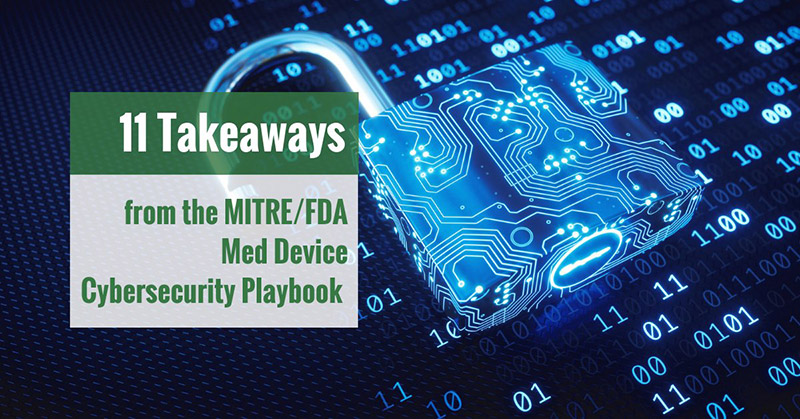

On October 2018, the MITRE Corporation and the Food and Drug Administration released their joint document, Medical Device Cybersecurity Regional Incident Preparedness and Response Playbook. This is the new Bible for organizations designing and manufacturing connected medical devices.
The document is the product of a four-year partnership between MITRE and the FDA. The document was developed in response to real-world cybersecurity breaches such as WannaCry and Petya/NotPetya. It focuses primarily on these types of potential large-scale threats.
MITRE and the FDA recommend regional collaboration. Individual organizations have necessarily limited resources that might not be up to the task of addressing emergent cybersecurity vulnerabilities. Trusted partnerships, however, established on a regional basis, can pool resources and become greater than the sum of their parts. These pooled resources can assist not only preparedness for existing threats, but fast response to zero day and other emerging threats.
MITRE and the FDA provide a number of concrete suggestions for collaboration in the document including:
- Joint exercises and simulations
- Sharing policies, plans and best practices
- Development of mutual aid response plans
- Sharing advisories and alerts
- Ensuring access to shared advisories and alerts
- Formal and informal methods of real-time information sharing
- Secondary channels of communication
- Creation of regional command centers
- Incident tracking procedures
- Mutual aid agreements such as diverting patients or sharing devices
- Mutual technical assistance
Regional groups need not be limited to manufacturers and designers. Stakeholders from the initial design team all the way to patient advocacy groups can and should come together. Cybersecurity for connected medical devices is decidedly an area where there is strength in numbers.
Once regional groups of organizations are established and follow these guidelines, it’s only a logical next step that these regional organizations will begin communicating with one another. This opens the opportunity for unified response across regions as appropriate. Even when cybersecurity breaches occur they can be dealt with swiftly. Contingency plans mean less inconvenience for end users, which in turn provides another layer of safety.
None of this will eliminate cybersecurity threats. What it will do, however, is make organizations more resilient when it comes to vulnerabilities to connected devices. What’s more, the guidelines are very open. This allows organizations and groups of organizations to adapt them in ways that make sense for their specific situation rather than a one-size-fits-all template that might not actually fit all.
Next Steps
- Download the white paper about Navigating Compliance and Cyber Security in Smart Medical Devices
- Subscribe to our blog to stay informed on product development and engineering efficiency topics.
- Schedule a free consultation with a member of SPK and Associates today.